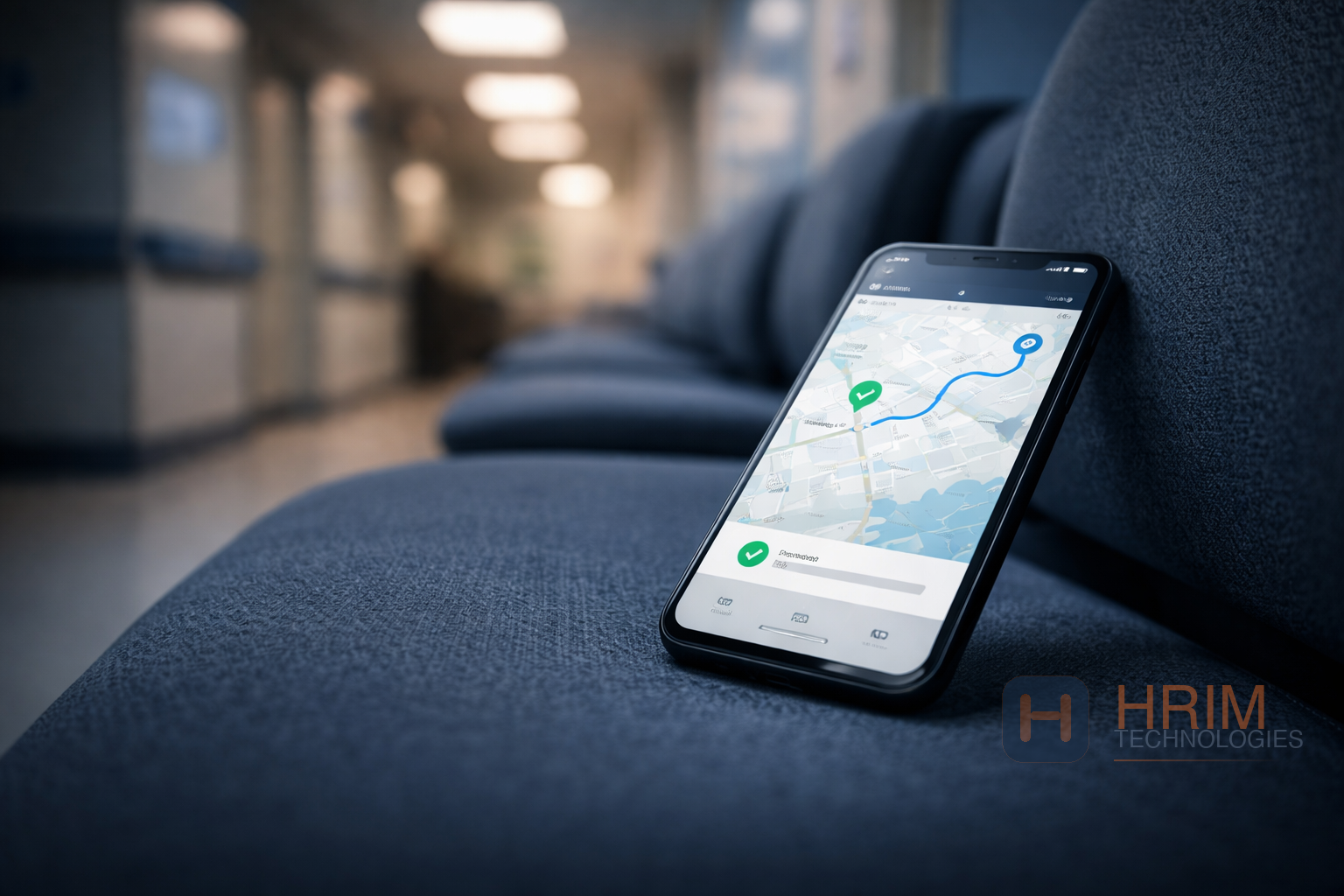
Every NEMT operator can put a GPS tracker on a vehicle. The technology is commodity. What is not commodity is turning that location data into something useful for the three audiences that need it: the patient waiting for a ride, the caregiver coordinating care, and the facility preparing for an arrival.
What patients need
Patients - especially elderly or cognitively impaired patients - need simplicity. Not a map with a moving dot, but a clear answer: your ride is 12 minutes away. The driver's name is James. He is driving a white van. Design for the most anxious user, not the most technical one.
What caregivers need
Family members and care coordinators need assurance, not detail. A notification when the ride is dispatched, another when the patient is picked up, and a confirmation when they arrive at the facility. Three messages. No app installation required. SMS works.
What facilities need
Medical facilities need advance notice to allocate resources. A clinic that knows a wheelchair patient is arriving in 8 minutes can have a tech ready at the entrance. A dialysis center that knows a patient's ride is running 20 minutes late can adjust the treatment schedule instead of leaving a chair empty.
The accessibility imperative
Healthcare transportation serves vulnerable populations. Any patient-facing interface must be accessible: large text, high contrast, screen reader support, and no interaction patterns that require fine motor control. This is not a nice-to-have - it is a regulatory and ethical requirement.
Beyond tracking: predictive operations
The real value of real-time data is not showing where vehicles are. It is predicting where they will be. A system that can forecast delays, identify at-risk trips, and trigger proactive re-routing before a patient misses their appointment - that is the shift from visibility to intelligence.