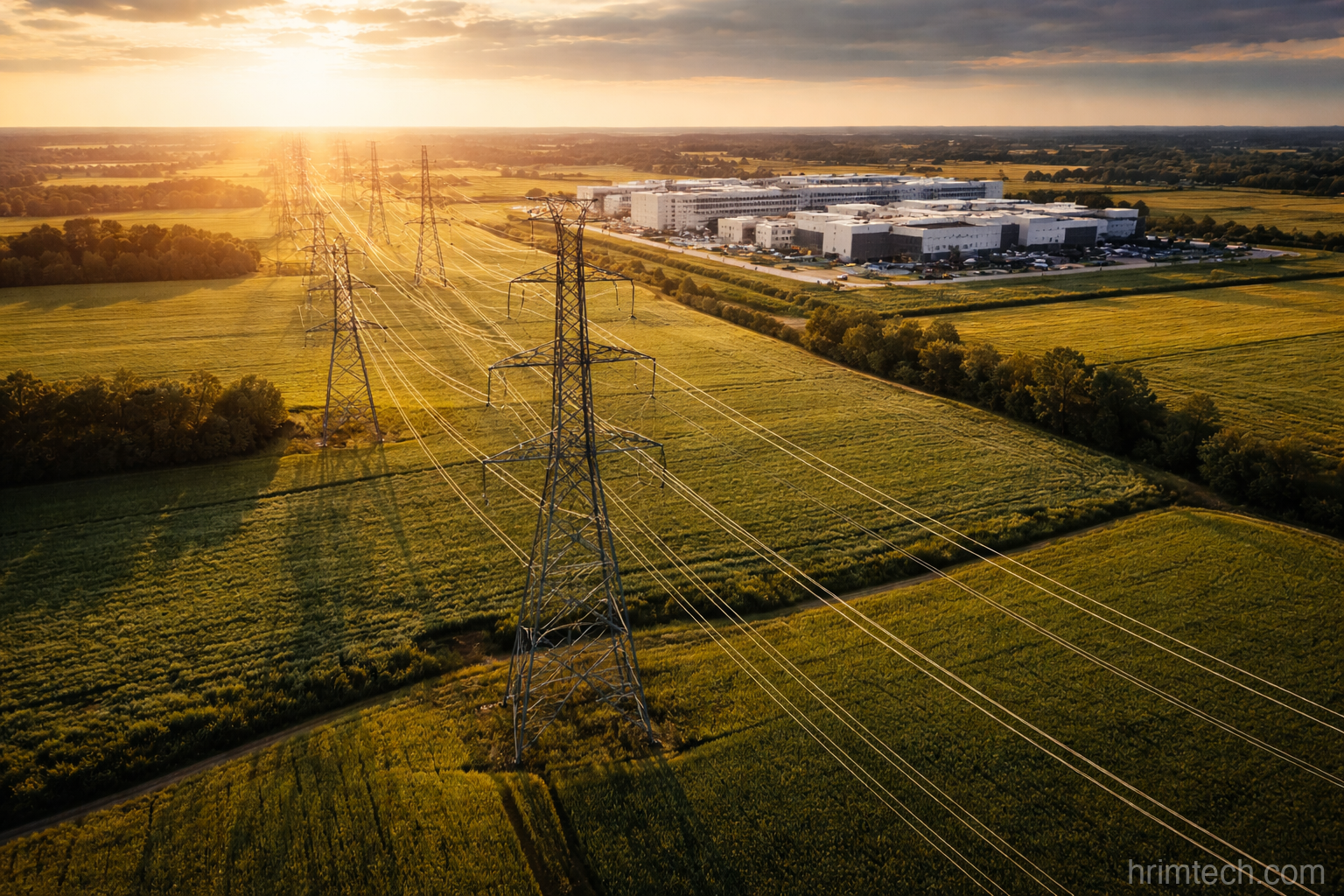
Every conversation about AI infrastructure eventually hits the same wall: power. The models need GPUs. The GPUs need electricity. The electricity needs generation, transmission, and distribution infrastructure that takes years to build. A new report from the nonprofit PowerLines, published April 14, 2026, puts a dollar figure on that wall: $1.4 trillion.
That is how much 51 investor-owned U.S. utilities plan to spend over the next five years, a 27 percent increase from $1.1 trillion planned just one year ago. According to Fortune, the spending surge is driven primarily by AI data center construction. Data centers currently consume over 4 percent of U.S. electricity and are projected to reach 9 percent by 2030.
Where the Money Is Going
The $1.4 trillion breaks down into three buckets. Roughly half goes to transmission and distribution infrastructure: new power lines, substations, and grid upgrades needed to deliver electricity from generation sources to data centers. About 30 percent goes to new power generation capacity: natural gas, nuclear, solar, wind, and battery storage. The remainder covers grid modernization, smart metering, and operational technology.
The regional distribution is uneven. The South, stretching from Texas to Maryland, accounts for $572 billion in planned spending. The Midwest follows at $272 billion. These numbers track with data center construction patterns. Northern Virginia remains the largest data center market in the world, and Texas is the fastest growing.
The top utility spenders tell the story: Duke Energy at $103 billion over five years, NextEra Energy at $94 billion, Southern Company at $81 billion, and PG&E at $74 billion. These are not speculative projections. They are filed capital plans that translate directly into rate cases, bond issuances, and construction contracts.
Who Pays for AI Infrastructure
The uncomfortable truth is that the cost of AI infrastructure is being socialized through electric bills. According to the PowerLines report, utility bills have surged approximately 40 percent since 2021. Record-high rate-hike requests totaling $31 billion were filed in 2025, more than double the prior year's near-record level. Approvals from 2025 alone will affect 56 million Americans through higher monthly bills.
The average residential electricity price is projected to increase 5.1 percent in 2026. That increase is not entirely attributable to data centers, but data center demand is the single largest new driver of utility capital spending. The grid upgrades, generation capacity, and transmission infrastructure being built to serve data centers are funded through the same rate base that charges every residential and commercial customer.
This creates a political and regulatory dynamic that technology companies cannot ignore. As AI data center demand drives utility spending, and utility spending drives rate increases, the connection between AI infrastructure and consumer electricity costs becomes harder to obscure.
The Strategic Implications
For enterprise IT leaders, this data changes the calculus on several fronts.
Data center site selection is now an energy strategy decision. The regional spending disparities mean that power availability, cost, and reliability will vary significantly by geography. Organizations choosing where to build, lease, or colocate need to model not just current electricity prices but the rate trajectory over the next five to ten years.
Sustainability reporting is becoming a power accounting exercise. As AI workloads grow, the energy and water consumption of AI inference is now measurable and material. The Stanford AI Index reported this week that GPT-4o's annual inference water consumption may exceed the drinking water needs of 12 million people. Organizations making ESG commitments need to account for the energy footprint of their AI usage.
On-premises and edge computing strategies are getting a second look. Not because cloud is bad, but because the power economics of centralized data centers are changing. For some workloads, running inference at the edge on lower-power hardware may be more cost-effective than paying the electricity premiums that large data center regions are beginning to charge.
What To Do About It
1. Model your AI infrastructure costs with power price trajectories. Do not assume current electricity rates will hold. Incorporate projected rate increases, especially in high-demand regions like Northern Virginia and Texas, into your data center and cloud cost models.
2. Factor energy availability into site selection. Before committing to a data center region, evaluate the local utility's capital plan, rate case history, and generation portfolio. Regions with constrained grids and aggressive rate cases will be more expensive to operate in over time.
3. Measure and report your AI energy footprint. If your organization has sustainability commitments, build visibility into the energy consumption of your AI workloads. The data is available from cloud providers, and the reporting frameworks are maturing.
4. Evaluate edge and on-premises inference for cost-sensitive workloads. Not every AI workload needs to run in a hyperscale data center. For high-volume, latency-tolerant inference tasks, edge deployment on power-efficient hardware may offer better economics.
HRIM's Take
The $1.4 trillion utility spending figure is the clearest evidence yet that AI infrastructure is not just a technology problem. It is an energy problem, a cost problem, and increasingly a political problem. The organizations that plan for this, by modeling power costs, diversifying infrastructure locations, and measuring energy footprints, will avoid the surprise of rising operational costs and regulatory scrutiny. The ones that treat electricity as someone else's problem will discover it is the fastest-growing line item in their AI budget.