On April 15, 2026, Accenture Ventures announced an investment in General Robotics, a startup founded by Ashish Kapoor, the former head of autonomous systems and robotics research at Microsoft. Kapoor built AirSim, the open-source simulator that trained Waymo, drone fleets, and half the aerospace autonomy sector before becoming foundational infrastructure for robotics research worldwide. His new company is not building a better robot. It is building the layer that sits above all of them.
Why Every Factory Has a Robot Fragmentation Crisis
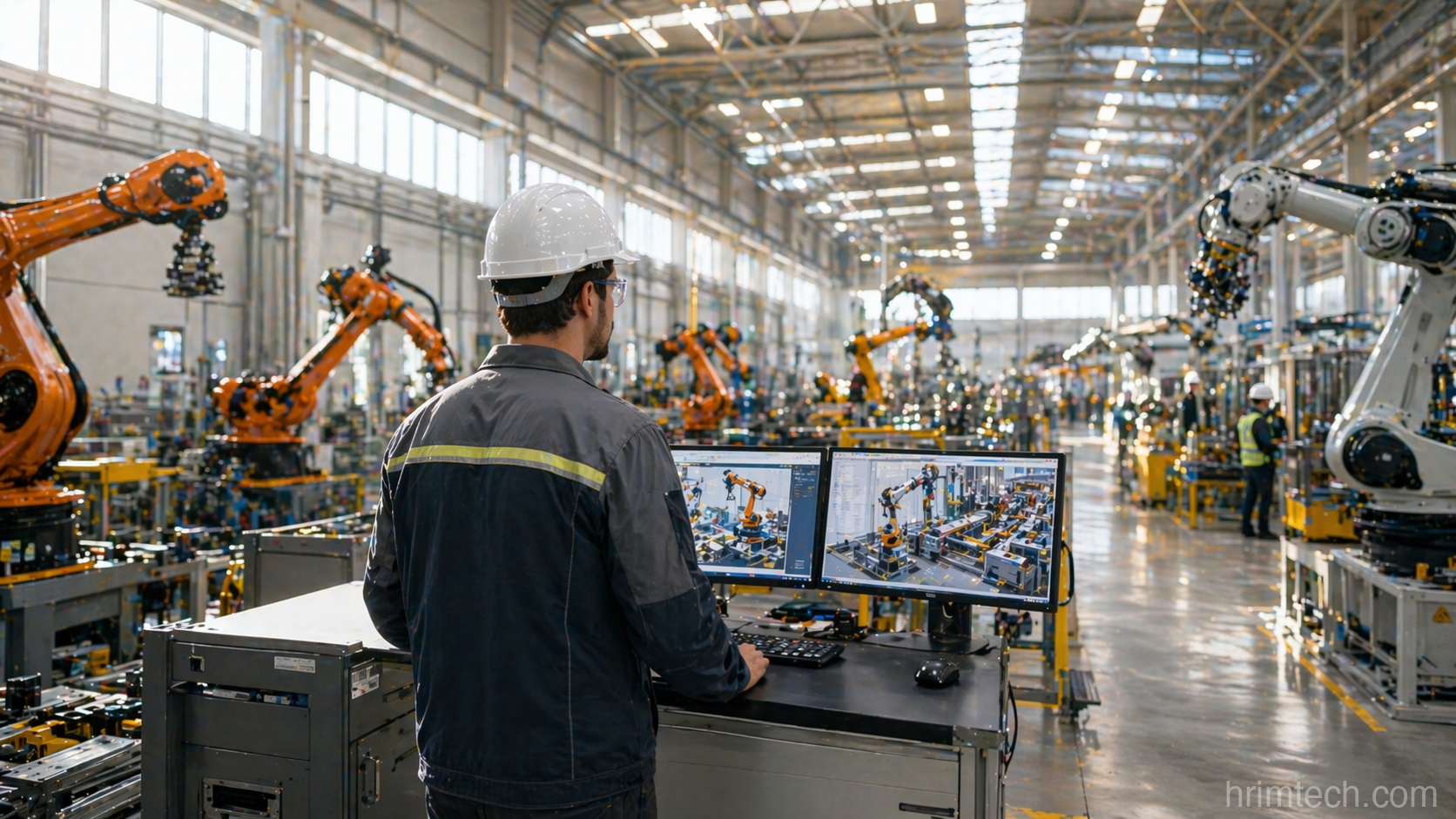
Modern manufacturing facilities routinely operate robots from five to ten different hardware vendors. A FANUC arm handles welding. A Ghost Robotics quadruped handles inspection. A Flexiv unit manages delicate assembly. A Galaxea platform moves materials across the floor. Each vendor ships its own SDK, its own software runtime, and its own integration requirements.
Adding a new AI skill to this environment means integrating with each robot's API separately. According to reporting from The Next Web on the Accenture investment, this forces factories to rewrite integration code for every new task across every hardware configuration. The capital cost of automation scales with business growth. The engineering overhead of managing a fragmented robot fleet scales faster.
This is the core problem General Robotics was built to solve, and it is the right problem to be working on. The industrial automation market is not short on robots. It is short on software that makes diverse robot populations work as a coherent, upgradeable system.
How GRID Actually Works
GRID is an intelligence orchestration layer positioned above the hardware. Rather than writing AI for any single robot type, General Robotics defines modular AI skills as reusable, portable units that can be deployed across any compatible robot in a fleet. A quality inspection skill, once validated, can be assigned to a FANUC arm on one production line and a Flexiv arm on another without rebuilding the underlying logic from scratch.
The development workflow is simulation-first. Before any AI skill reaches physical hardware, it is trained and validated inside NVIDIA Isaac Sim, which provides photorealistic physics simulation for robotic environments. Operators can stress-test new behaviors across thousands of simulated edge cases without halting production lines or risking hardware damage. According to General Robotics' technical documentation, the platform supports up to 25,000 concurrent inference requests, which means it is designed for enterprise-scale deployments where large robot fleets need AI guidance simultaneously.
Data sovereignty is built into the platform architecture, which matters to manufacturing clients who cannot route operational telemetry through third-party infrastructure without restriction.
The strategic fit with Accenture's own roadmap is direct. Accenture launched its Physical AI Orchestrator in October 2025 to coordinate facility-level operations: scheduling workflows, managing resource allocation, connecting systems across a plant. GRID operates one layer below that: giving individual robots the intelligence to adapt and respond within those workflows. According to Accenture's announcement, the two platforms are designed to be complementary, with GRID handling robot-level AI and the Orchestrator handling facility-level coordination.
The Numbers
General Robotics raised an undisclosed amount from Accenture Ventures in April 2026. The company also earned a place in Microsoft for Startups' Pegasus Program, which provides access to Azure resources, enterprise go-to-market support, and technical advisory from Microsoft. No revenue figures or enterprise customer counts have been disclosed publicly.
The broader context is worth noting. According to Crunchbase's Q1 2026 analysis, physical AI and robotics startups captured a significant share of the quarter's record venture activity. The investment thesis has converged across firms: language models solved information-layer problems. Physical AI solves operational ones. Kapoor's background with AirSim gives General Robotics a credible technical pedigree at a moment when simulation-based robot training is widely recognized as the right path to scalable physical AI deployment.
What To Do About It
1. Audit your current robot fleet for vendor fragmentation. Count how many distinct hardware vendors and integration SDKs your engineering team currently maintains. This baseline quantifies the orchestration overhead that platforms like GRID are designed to absorb.
2. Evaluate hardware-agnostic AI layers in your next robotics procurement. When assessing new automation investments, include the long-term engineering cost of vendor-specific integration. A platform that abstracts the hardware layer may carry a higher upfront cost but a significantly lower total cost of ownership over a five-year horizon.
3. Adopt simulation-first validation for any new AI skills. Tools like NVIDIA Isaac Sim allow teams to stress-test AI behavior across failure modes before physical deployment. This reduces the cost of physical iteration and shortens the time from capability development to production deployment.
4. Connect your robotics strategy to your data strategy. AI skill improvement depends on operational telemetry: what worked, under what conditions, and where failures occurred. Ensure your robot fleet generates structured data that feeds back into your AI training pipeline, not just your maintenance log.
HRIM's Take
Every major technology modernization wave produces a platform problem before it produces a platform winner. ERP fragmentation created the market for integration middleware. Application sprawl created the market for identity and access management. Robot fleet fragmentation is the same problem at the hardware level. General Robotics is building the orchestration layer that makes existing robot investments programmable, upgradeable, and AI-extensible without requiring a hardware replacement cycle. For manufacturing and logistics clients evaluating physical AI strategy, the question is not which robot vendor to standardize on. It is which software layer will give you the flexibility to change vendors, upgrade AI skills, and scale your fleet without re-engineering from scratch each time.