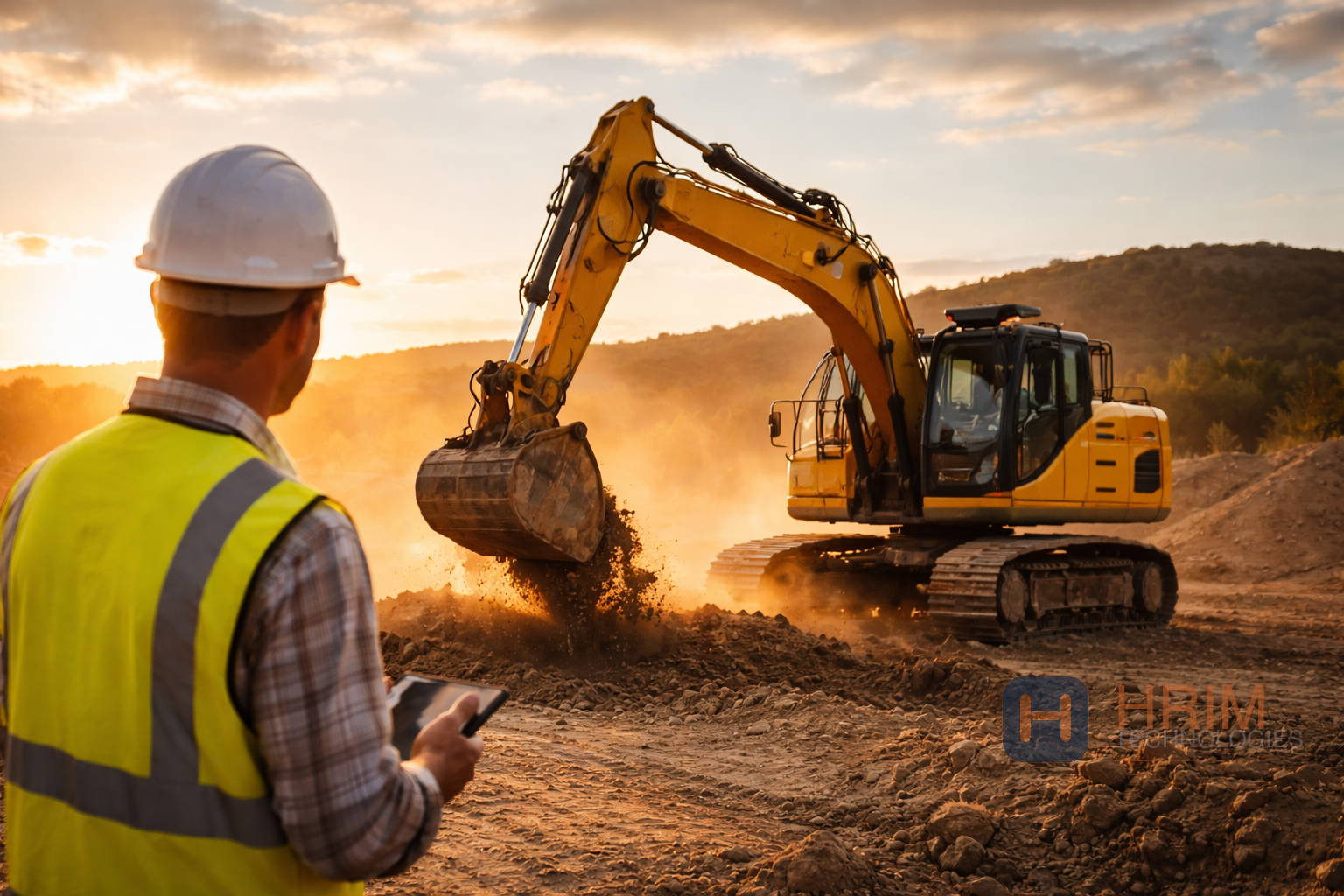
Caterpillar unveiled its next generation of autonomous construction equipment at CES 2026, but the headline is not the announcement. It is what already happened in Virginia. According to Caterpillar, an autonomous haul truck fleet at Luck Stone's Bull Run Quarry in Chantilly reached productivity levels matching staffed machines shortly after deployment and went on to autonomously haul one million tons. That is not a lab demo. It is commercial-scale proof that autonomous heavy equipment works on real jobsites, today.
From Mining Proof Points to Construction Buildout
Caterpillar has been running autonomous haul trucks in mining operations for over a decade. The company says its autonomous systems represent more than 30 years of research, development, and real-world deployment. What changed at CES 2026 is the scope of the ambition. According to Caterpillar's press release, the intelligent product lineup will now include excavators, loaders, haul trucks, dozers, and compactors, each capable of performing tasks autonomously.
Excavators will support autonomous trenching, loading, and grading. Dozers will handle precision grading and site preparation. Compactors will optimize pass counts automatically. This is not one specialized machine doing one task. It is an entire fleet of equipment types learning to operate without a human in the cab.
The technology stack behind this expansion is substantial. According to Caterpillar, every machine integrates LiDAR, radar, GPS, and high-resolution cameras to build a constantly updated 360-degree digital model of the jobsite. Edge computing hardware on each machine processes sensor data in real time using AI and machine learning models trained on decades of operational data.
The Data Quality Problem Nobody Solved Yet
While Caterpillar is pushing hardware autonomy forward, a conference held just weeks ago exposed the industry's soft underbelly. At New York Build 2026 in March, construction leaders highlighted that poor data quality and fragmented workflows remain the primary barrier to scaling AI and robotics adoption across the industry, according to Construction Dive.
The core challenge is familiar to anyone who has worked in construction technology: design models do not match construction documents. Updates arrive as fragments through bulletins and revisions. When an autonomous system relies on a BIM model to guide an excavator, and that model is three revisions behind the latest engineering change order, the machine digs in the wrong place.
According to panelists at New York Build, the industry's fundamental principle remains unchanged: the output quality of any automated system is limited by the input data quality. Autonomous excavators with centimeter-level GPS accuracy are meaningless if the digital plans they reference are inaccurate.
This is the gap between Caterpillar's quarry success and widespread construction adoption. A quarry is a controlled, repetitive environment. The haul routes are fixed. The material is consistent. The variables are manageable. A commercial construction jobsite is chaotic: subcontractors modify plans daily, underground utilities appear where drawings say nothing exists, and weather changes soil conditions hour by hour.
What Makes Quarries Different from Jobsites
Caterpillar's partnership with Luck Stone succeeded because quarry operations compress the complexity that makes construction difficult. The truck drives the same route from pit to crusher hundreds of times per day. The loading zone is consistent. The obstacles are predictable. It is the ideal proving ground for autonomous equipment because the environment cooperates with the technology.
Construction sites do not cooperate. They evolve daily. New trades arrive, materials get stacked in unplanned locations, and the scope changes with every RFI. Caterpillar acknowledges this distinction. According to the company, autonomous machines in construction will initially expand to large, repetitive tasks like piling, mass grading, and trenching before taking on more complex operations.
That phased approach is smart. The industry saw what happened when companies tried to deploy construction robots without addressing workflow integration: the technology worked in demos and failed on real jobsites. The lesson from New York Build 2026 is that the data infrastructure needs to mature alongside the hardware.
What To Do About It
1. Audit your data pipeline before buying autonomous equipment. If your BIM models are not kept current through construction, autonomous machines will inherit every error in your digital twin. Start with a data quality assessment of your as-built documentation workflow.
2. Identify repetitive, high-volume tasks on your projects. Mass grading, trenching, piling, and material hauling are the first candidates for autonomous equipment. Do not try to automate complex, variable operations first.
3. Plan for the operator transition. Autonomous equipment does not eliminate operators. It changes their role from hands-on-controls to fleet supervision. According to Caterpillar, the Luck Stone deployment included employee retraining as a core part of the rollout. Budget for training and change management now.
4. Watch Caterpillar's construction pilot timeline. The company says construction jobsite pilots are coming soon. If you run large earthwork or site preparation projects, get on the early adopter list. The productivity data from Bull Run suggests the ROI case is strong for the right applications.
HRIM's Take
One million tons hauled autonomously is the kind of milestone that separates hype from reality. Caterpillar is not a startup making promises. It is the world's largest construction equipment manufacturer delivering measurable results at a working quarry. But the path from quarry autonomy to jobsite autonomy runs straight through the data quality problem the industry discussed at New York Build. The firms that will benefit most from autonomous equipment are the ones investing in clean, current digital models right now. The excavator is ready. The question is whether your data is ready for the excavator.